
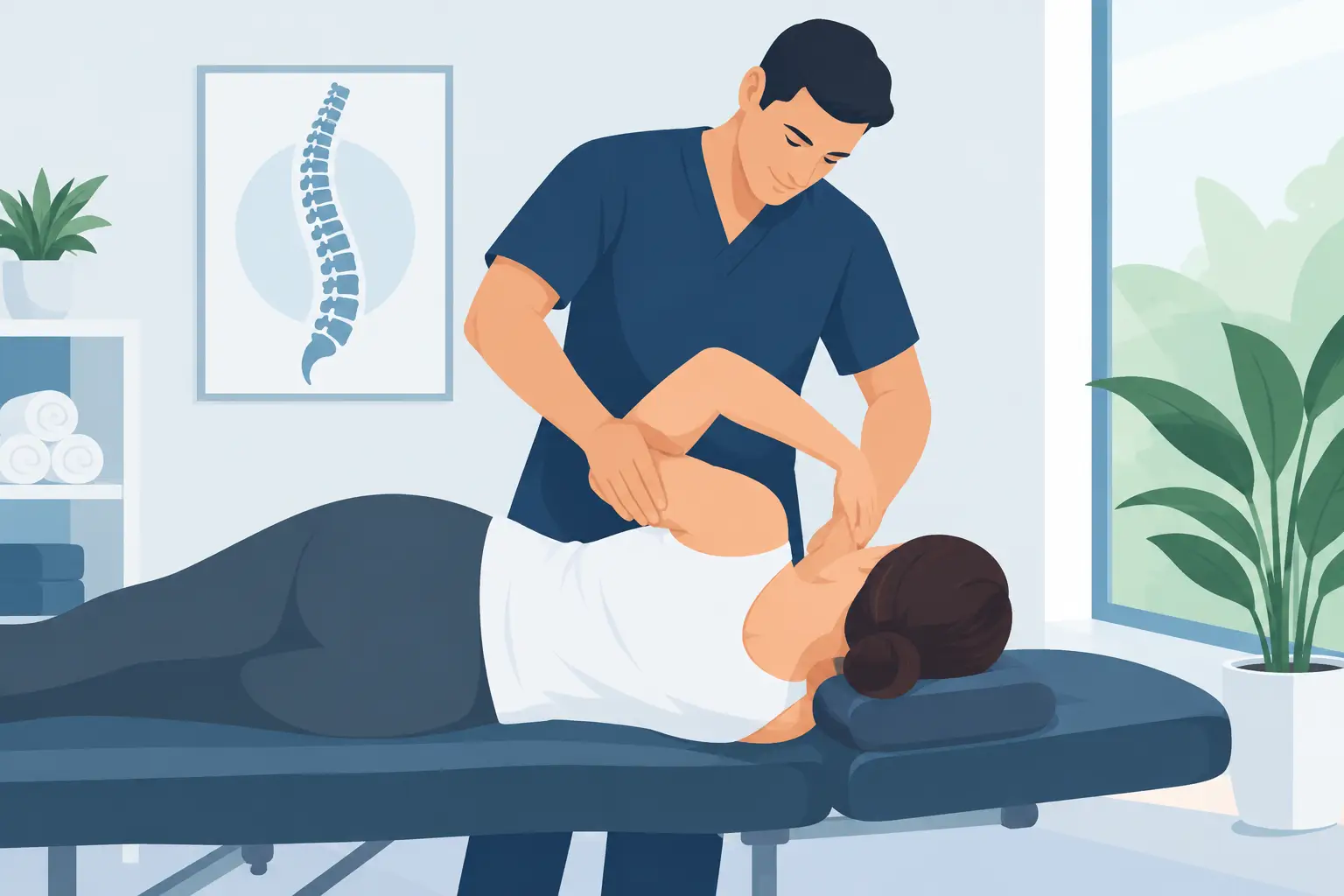
Chiropractic for Range of Motion and Better Movement
Reaching into the back seat, lifting a toddler, taking a fuller stride on a trail, or turning your head to check traffic should not feel like a negotiation with your body. Chiropractic for range of motion can help people of many ages address movement restrictions that affect daily comfort, confidence, recovery, and physical performance.
Range of motion is more than a flexibility score. It is the amount and quality of movement available at a joint or body region, including how smoothly you can bend, rotate, reach, squat, and walk. When the spine and nervous system are functioning well, the body is better positioned to coordinate those movements efficiently. When movement is limited, the cause is not always obvious, and the body often starts compensating elsewhere.
At Good Chiropractic, care is centered on specific, neurologically focused adjustments and an individualized plan designed around how you and your family want to move, function, and feel.
Why range of motion changes
A loss of motion can show up suddenly after a fall, hard workout, awkward lift, or long day at a desk. More often, it develops gradually. You may notice that one shoulder does not reach as high as the other, your low back feels guarded when you get out of the car, or your neck turns less comfortably in one direction.
Muscles, joints, connective tissues, prior injuries, sleep position, repetitive movement, stress, and activity demands all influence mobility. The nervous system also plays an essential role. It receives information from the body and helps organize muscle tension, balance, coordination, and protective responses. If the body senses strain or irritation, it may tighten surrounding muscles and limit motion as a protective strategy.
That protective response can be useful in the short term. But when it lingers, restricted movement may change how you train, work, carry your child, or participate in the activities that make you feel like yourself. The goal is not simply to chase a bigger stretch. It is to support better movement control and healthier function.
How chiropractic for range of motion may help
A chiropractic examination looks at more than the spot that feels tight. Your chiropractor may assess posture, movement patterns, spinal motion, joint function, health history, and the demands of your day or sport. This broader view matters because the area that feels restricted is not always the area driving the compensation.
Specific chiropractic adjustments are intended to support spinal and joint motion and improve communication between the body and nervous system. For some people, this may help reduce the sense of stiffness and make everyday movements feel easier. Improved motion can also create a better foundation for strength work, mobility exercises, athletic training, and recovery routines.
Results vary because every body, history, and movement goal is different. A golfer working toward a smoother rotation, a parent wanting to get down on the floor comfortably, and a runner returning after a demanding season may each need a different care plan. Meaningful progress is often measured by function: turning your head more freely, squatting with greater confidence, recovering well after activity, or moving without constantly bracing for the next twinge.
Adjustment is one part of a movement plan
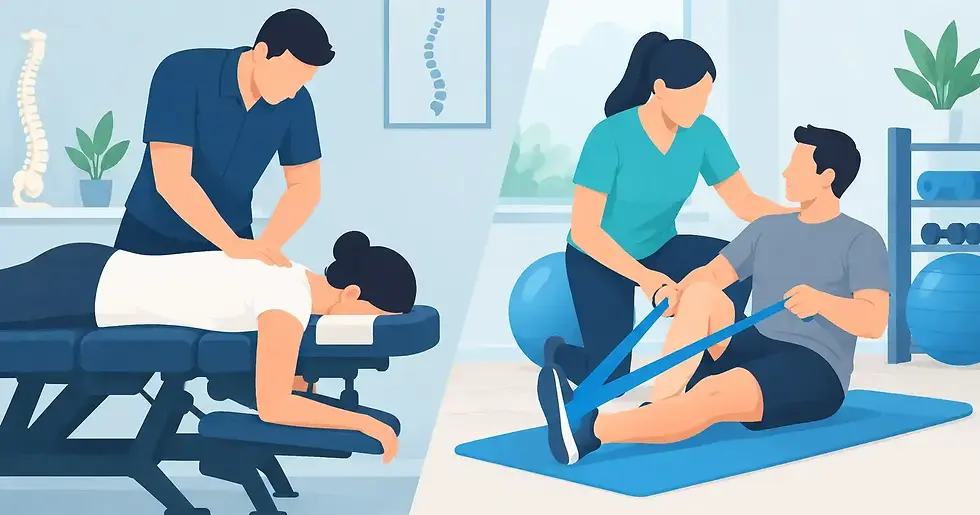
Chiropractic care is not a substitute for movement, strength, recovery, or appropriate medical evaluation. It works best as part of a thoughtful approach to health. Depending on your needs, your chiropractor may recommend changes to posture habits, movement strategies, home exercises, hydration, recovery, or training volume.
There is also a balance to respect. Pushing aggressively into a restricted joint or forcing a stretch through pain is not always productive. The body needs enough challenge to adapt, but enough safety to avoid increasing irritation. A personalized plan can help you build mobility that is useful in real life, not just impressive in a single stretch.
Mobility support for active adults and athletes
Northern Colorado offers plenty of reasons to stay active, from trail runs and bike rides to field sports, lifting, skiing, and weekend projects. These activities ask a lot of the body. Repetition can expose asymmetries, and a small restriction in hip, ankle, thoracic spine, or shoulder motion can affect the way force travels through the body.
For athletes, range of motion is not only about being loose. Too little movement can limit stride length, throwing mechanics, squat depth, overhead position, and rotation. Too much motion without control can be a problem, too. The strongest goal is usable mobility: enough movement for the task, paired with stability, coordination, and efficient force production.
Chiropractic care may support that goal by helping address areas of joint restriction and nervous-system stress that affect movement patterns. It can be especially valuable during a training cycle when recovery matters as much as effort. Your care plan should reflect your sport, current workload, prior injuries, and competition schedule rather than follow a one-size-fits-all routine.
Range of motion through pregnancy and family life
Pregnancy brings rapid changes in posture, joint loading, balance, and daily movement. As the body adapts, simple activities such as sleeping, standing from a chair, walking, or picking up an older child can feel different. Gentle, specific chiropractic care may help support comfort and mobility during this changing season, with care adapted to the expectant mother's needs.
For parents, movement matters because family life is physical. You lift car seats, lean over cribs, carry groceries, sit on the floor, and turn quickly when someone calls your name. Addressing restrictions early can help you stay more comfortable and capable in the moments that cannot be put on hold.
Children and teens benefit from healthy movement, too. Their bodies are constantly growing, learning new skills, participating in sports, and adapting to school, screens, backpacks, and play. Pediatric chiropractic care is gentle and age-appropriate. Rather than treating children like small adults, the focus is on supporting healthy development, resilient movement, and nervous-system function at every stage.
When restricted movement needs additional evaluation
Chiropractic care can be a helpful option for many mobility concerns, but some symptoms deserve prompt medical attention. Seek urgent evaluation after significant trauma, or if movement loss comes with severe or worsening pain, unexplained weakness, numbness, changes in bowel or bladder control, fever, unexplained weight loss, dizziness, or loss of coordination.
A good chiropractor will consider your health history, listen to your concerns, and refer when another provider or type of testing is appropriate. Collaborative care protects your health and helps ensure that the plan matches the real source of the problem.
Building movement that lasts
Lasting range of motion is usually built through consistency, not a single perfect appointment. Small choices throughout the week matter: changing positions during desk work, warming up before demanding activity, strengthening through comfortable ranges, allowing recovery after hard sessions, and paying attention before a minor restriction becomes a larger compensation pattern.
Your chiropractic plan should evolve as your life changes. The care that supports a new parent may look different from the care that helps a teenager through a sports season or an adult preparing for a hiking trip. That is why individualized care matters. The aim is not to make every body move the same way. It is to help your body move well for the life you want to live.
If stiffness, guarded movement, or recurring restrictions are keeping you from participating fully, a consultation can offer a clearer starting point. Better movement is often built one intentional step at a time, and your body deserves care that supports where you are now and where you want to go next.


Comments