
Chiropractic Versus Physical Therapy Recovery
A sore back after lifting a toddler, a stiff neck after a long workweek, or a knee that will not feel right after a trail run can all raise the same question: where should you start? Chiropractic versus physical therapy recovery is not always an either-or choice. Both can support better movement and a more confident return to the activities you and your family enjoy, but they do so in different ways.
The right path depends on what is limiting you, how long it has been happening, your health history, and your goals. Some people need hands-on support to improve spinal motion and nervous-system function. Others need structured rehabilitation to rebuild strength, stability, and tolerance for a particular activity. Many benefit from a coordinated approach.
Chiropractic Versus Physical Therapy Recovery: The Key Difference
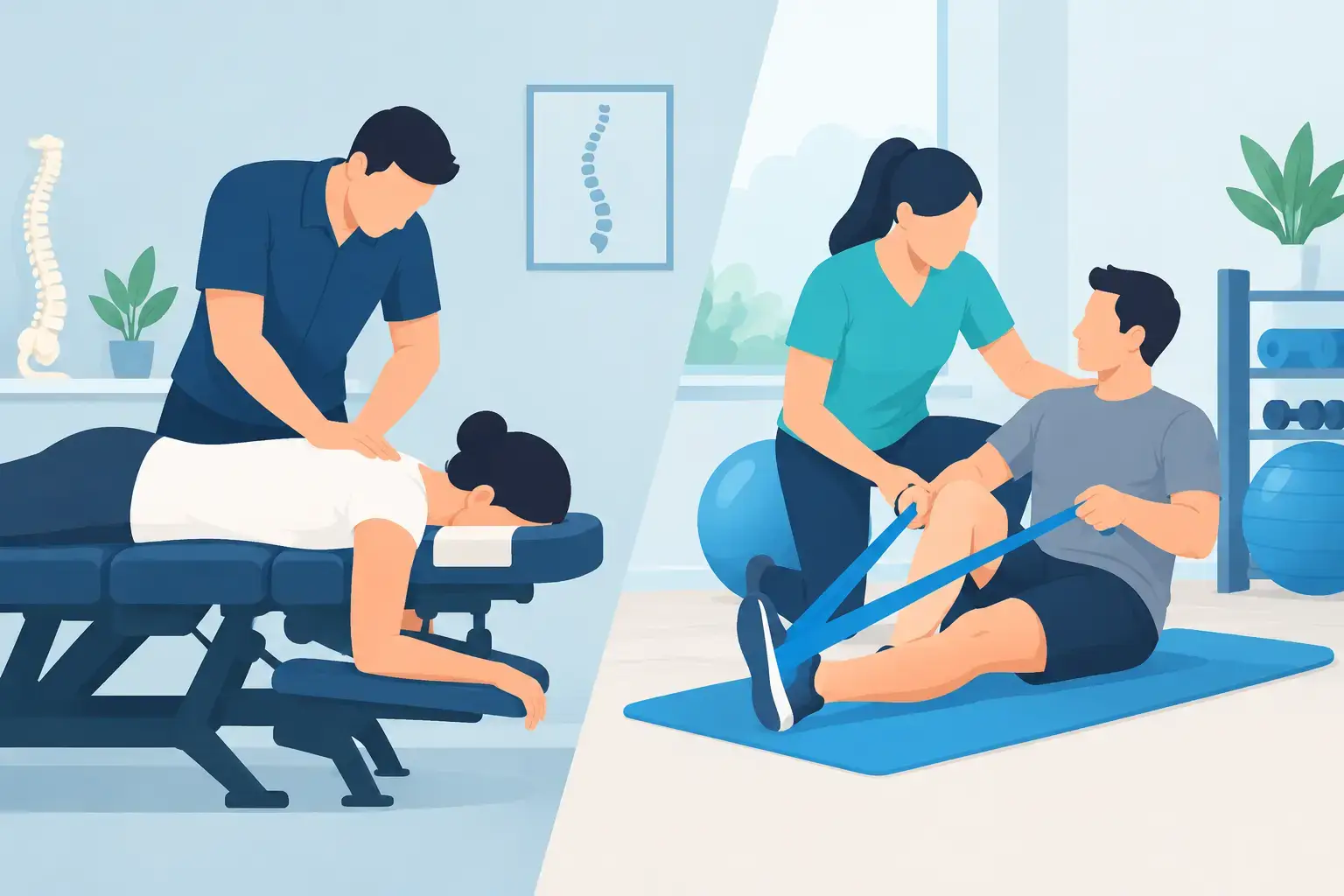
Chiropractic care focuses on how the spine, joints, and nervous system work together. At Good Chiropractic, care centers on specific, neurologically focused adjustments intended to support clearer communication between the brain and body. When the spine is not moving or functioning well, people may notice tension, reduced range of motion, compensating movement patterns, or discomfort that makes daily life and exercise harder.
A chiropractic visit typically includes a conversation about your concerns, an assessment of movement and spinal function, and recommendations based on your individual needs. Adjustments are tailored to the person in front of the doctor, whether that is an expecting mother seeking more comfort, a child growing through new developmental stages, or an athlete working toward more efficient movement and recovery.
Physical therapy, on the other hand, is generally centered on rehabilitation through movement. A physical therapist evaluates strength, mobility, balance, coordination, and the demands of a specific task or sport. Treatment may include guided exercise, mobility work, hands-on techniques, education, and a progressive home program. The goal is often to help a person regain capacity after injury, surgery, or a period of reduced activity.
Put simply, chiropractic care often emphasizes spinal and nervous-system function, while physical therapy commonly emphasizes restoring strength and movement capacity through progressive exercise. Neither approach should be reduced to a quick fix. Meaningful recovery usually requires a plan that considers the whole person.
When Chiropractic Care May Be a Strong Starting Point
Chiropractic care may make sense when you are dealing with spinal stiffness, recurring tension, limited range of motion, or movement that simply does not feel as free or balanced as it used to. It can also be a proactive part of wellness care for people who want to support mobility, resilience, and physical performance before discomfort becomes the only reason to seek help.
For active adults in Northern Colorado, this may look like addressing restricted hip or mid-back motion that affects cycling, lifting, skiing, or trail running. For parents, it may mean having more comfortable movement while carrying children, working at a desk, or keeping up with a busy household. For athletes, better spinal motion and body awareness can support more efficient mechanics as they train and recover.
Chiropractic care is also individualized across life stages. Prenatal chiropractic care may help expectant mothers support mobility and comfort as the body changes. Gentle pediatric care is designed with a child’s age, development, and needs in mind. Family wellness care can help create a consistent foundation for moving, functioning, and feeling your best together.
That does not mean an adjustment replaces conditioning, rehabilitation, or medical evaluation when those are needed. Instead, it can be one meaningful piece of a care plan focused on how your body adapts and performs.
When Physical Therapy May Be the Better Fit
Physical therapy is often especially valuable when recovery requires a clear progression of loading and skill-building. After a surgery, a significant sprain or strain, a fracture, or a period of immobilization, the body may need targeted work to restore strength, endurance, balance, and confidence.
For example, someone recovering from an ACL injury may need a detailed program that progresses from basic knee control to jumping, cutting, and sport-specific drills. A runner with persistent Achilles pain may need help gradually increasing calf strength and training volume. A person who has avoided overhead movement because of shoulder pain may benefit from coached exercises that rebuild shoulder control over time.
Physical therapy can also be helpful when a particular activity exposes a weakness or compensation. If your knee collapses inward during squats, your shoulder loses control during throwing, or your balance is unreliable after an ankle injury, exercise-based rehabilitation can address those patterns directly.
The trade-off is that physical therapy often requires regular participation outside the clinic. Results depend in part on following through with the prescribed exercises and progressing them appropriately. That commitment can be highly worthwhile, especially when your goal is to return safely to a demanding sport, job, or recreational activity.
Can Chiropractic and Physical Therapy Work Together?
Yes. For many people, chiropractic and physical therapy can complement one another. Chiropractic care may support joint motion, spinal function, and comfort that make it easier to move well. Physical therapy can then build on that improved movement with strength, stability, and activity-specific training.
Consider a recreational soccer player with low back tightness and limited hip motion who also feels less stable when changing direction. Chiropractic care may address spinal and pelvic movement restrictions, while physical therapy may help strengthen the hips, trunk, and lower body for cutting and sprinting. The best plan is not about declaring one provider the winner. It is about identifying what your body needs to return to activity with more confidence.
Good communication matters. Share your full health history, current symptoms, training routine, previous injuries, and goals with every provider involved. If you are already working with a physical therapist, let your chiropractor know. If you are under the care of a physician or surgeon, follow their recommendations and make sure your care team understands any activity restrictions.
How to Choose the Right Recovery Plan
Start by getting clear on your goal. Are you hoping to move more comfortably through everyday life? Return to a sport after an injury? Prepare your body for pregnancy and postpartum demands? Keep recurring stiffness from interrupting your training? Your answer helps guide the type of care that may be most useful.
Next, think about the main limitation. If spinal stiffness, restricted motion, or recurring tension seems to be affecting how you move, chiropractic care may be an appropriate place to begin. If weakness, poor balance, post-surgical recovery, or the need for a structured return-to-sport program is the central issue, physical therapy may be essential.
It is also reasonable to ask a provider how progress will be measured. A thoughtful recovery plan should have practical markers, such as improved range of motion, less guarded movement, better tolerance for walking or lifting, more consistent training, or greater confidence in daily activities. Your plan should be adjusted as your needs change, not treated as a one-size-fits-all schedule.
Know When to Seek Medical Evaluation First
Some symptoms need prompt medical attention rather than a wait-and-see approach. Seek urgent evaluation for severe or worsening weakness, loss of bowel or bladder control, numbness in the groin area, significant trauma, fever with severe pain, unexplained weight loss, chest pain, or sudden symptoms that concern you.
You should also talk with a qualified medical professional before beginning or changing care if you have a complex health condition, recent surgery, cancer history, osteoporosis, or symptoms that are new, intense, or rapidly progressing. Personalized care begins with making sure the right type of evaluation happens at the right time.
Recovery is not always a straight line, and it does not have to be something you figure out alone. Whether you need help restoring comfortable spinal motion, rebuilding strength after an injury, or creating a more resilient foundation for an active family life, the best next step is care that listens to your goals and helps your body move forward with purpose.


Comments