
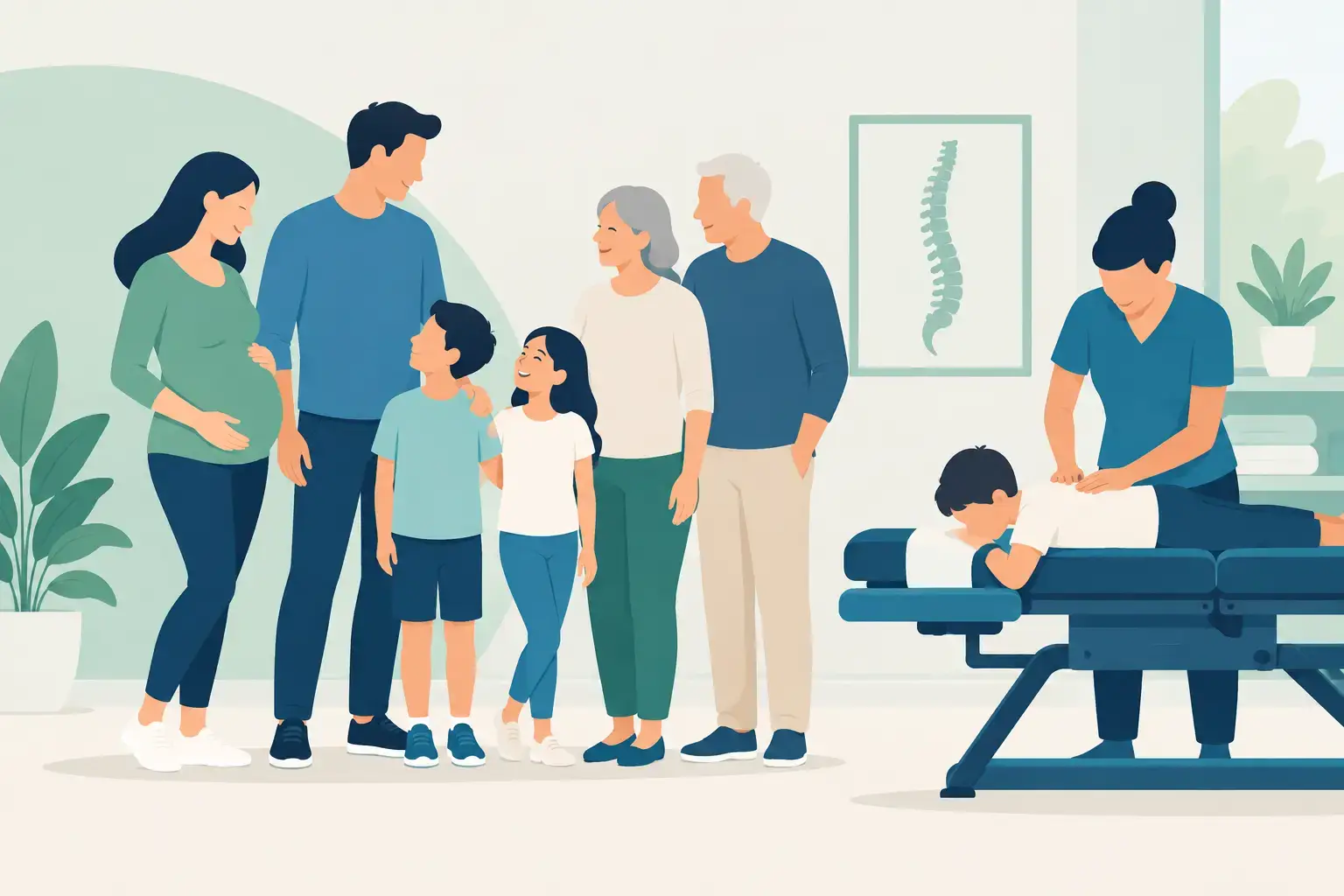
Family Wellness Chiropractic for Every Stage
A family’s health rarely follows a straight line. One week, you may be managing pregnancy-related stiffness, a child’s changing activity level, and your own tight shoulders after long hours at work. The next, it may be soccer season, a growth spurt, or a weekend spent hiking the foothills. Family wellness chiropractic offers a proactive way to support how you and your family move, function, and adapt through those changing seasons.
Rather than waiting until discomfort interrupts daily life, wellness-focused chiropractic care looks at spinal health and nervous-system function as part of a bigger picture. The goal is not to promise a quick fix for every concern. It is to help each person build better mobility, resilience, and body awareness with care that fits their age, activities, and goals.
What Family Wellness Chiropractic Means
Family wellness chiropractic is personalized care for people at different stages of life, from expectant mothers and infants to active adults and grandparents. While every care plan is different, the shared focus is supporting a healthy spine and nervous system so the body can move and respond efficiently.
Your nervous system helps coordinate communication between the brain and body. When joints in the spine are not moving well or the body is under repeated physical stress, people may notice stiffness, limited range of motion, changes in comfort, or a sense that movement takes more effort than it should. Specific chiropractic adjustments are designed to address joint motion and support better function.
For families, this approach is especially practical because needs change quickly. A child learning new movement skills does not need the same care as a parent carrying a toddler, and neither needs the same approach as a high school athlete training through a demanding season. Personalized care respects those differences.
Care That Grows With Your Family
Prenatal chiropractic care
Pregnancy asks a great deal of the body. As posture, balance, and weight distribution shift, many expectant mothers experience tension through the low back, hips, pelvis, or mid-back. Gentle, specific chiropractic care can support mobility and comfort during these changes.
Prenatal care should always be adapted to the individual. Comfortable positioning, gentle techniques, and an understanding of each trimester matter. Chiropractic care does not replace prenatal medical care, and it works best as one part of a mother’s broader healthcare plan. For many women, maintaining comfortable movement can make everyday tasks, rest, and staying active feel more manageable.
Infants and children
Children are constantly developing new movement patterns. From tummy time and crawling to playground falls, backpacks, screens, and organized sports, their bodies encounter plenty of change. Pediatric chiropractic care uses very gentle, age-appropriate adjustments and begins with a careful conversation about the child’s health, development, and daily routines.
A wellness visit for a child is not about treating every normal childhood challenge as a spinal problem. It is an opportunity to assess movement, posture, and function and to give parents practical guidance. If a child has a medical concern, developmental regression, persistent pain, fever, unexplained symptoms, or has experienced significant trauma, prompt evaluation by the appropriate medical professional comes first.
For healthy, active children, regular check-ins may help families stay attentive to how their child is moving and adapting as they grow. The schedule depends on the child, not a one-size-fits-all calendar.
Teens and active adults
Teen years often combine rapid growth with packed schedules. Sports practices, schoolwork, driving, part-time jobs, and less sleep can all add up. Adults face their own version of that load through work demands, household responsibilities, training, and recreation.
Chiropractic care can be useful when the goal is to improve joint mobility, move more efficiently, and recover well from the physical demands of life. An adjustment may be paired with recommendations around posture, movement habits, mobility work, recovery, or activity modifications. The most effective plan is one a person can realistically follow between visits.
Older adults and multigenerational households
Staying mobile supports independence and confidence at every age. For older adults, care often centers on maintaining comfortable movement, balance, and the ability to continue enjoying valued activities. Adjustments should be adapted for health history, bone density, medications, prior surgeries, and individual comfort.
This is one reason a family-centered practice can be valuable. When each member of the household receives care that fits their needs, health routines become easier to understand and support together. A parent may work on better lifting mechanics, a teen may focus on sports recovery, and a grandparent may prioritize walking comfortably around the neighborhood.
Why a Nervous-System Focus Matters
The spine is more than a stack of bones. It protects the spinal cord and provides a foundation for posture, movement, and the body’s ability to handle physical demands. When spinal joints move well, muscles and other tissues can often work with greater efficiency.
A nervous-system-focused approach looks beyond the location of discomfort. For example, recurring neck tension may be influenced by workstation habits, sleep position, stress, training volume, or limited movement through the upper back. Hip discomfort may involve movement patterns in the low back, pelvis, knees, or feet. The goal is to understand the whole person rather than chase symptoms in isolation.
That does not mean every ache requires an adjustment. Sometimes the best recommendation is rest, a referral, strengthening, a change in training load, or a conversation with another healthcare provider. Thoughtful care includes knowing when chiropractic is appropriate and when another kind of support is needed.
What a Family Wellness Visit Can Look Like
A good first visit starts with listening. Your chiropractor should ask about your health history, current concerns, goals, daily activities, and any changes that have affected how you move or feel. A physical examination may include posture, range of motion, movement patterns, and neurological or orthopedic assessments when appropriate.
From there, you should receive clear recommendations that make sense for your situation. Some people come in because discomfort has limited their movement. Others want support during pregnancy, a check-in for a growing child, or help preparing for a race, tournament, or active vacation. Your plan may include specific adjustments, guidance for at-home mobility, and a suggested schedule based on your response and goals.
Wellness care is not a contract to be locked into forever. Needs can change with a new baby, a new sport, a demanding work season, or a return from injury. Reassessing the plan helps keep care useful and personal.
Building Healthy Habits Outside the Office
Chiropractic care has the greatest value when it supports the habits that happen the other 99 percent of the week. Families do not need perfect routines to benefit from better movement. Small, repeatable choices matter.
Make room for regular movement that your family enjoys, whether that is walking, biking, trail time, strength training, or playing outside. Encourage children to vary their positions during homework and screen time. Help athletes take recovery seriously by making sleep, hydration, nutrition, and rest days part of the training plan rather than an afterthought.
It also helps to pay attention to early signals. A child who avoids a favorite activity, an adult who keeps modifying workouts, or a parent who wakes up stiff every morning may benefit from a conversation before the issue becomes more disruptive. Early attention does not guarantee that problems will disappear, but it can create more options for managing them.
Choosing the Right Chiropractic Partner
Look for a chiropractor who welcomes questions, explains recommendations clearly, and adjusts care to each person in your family. Gentle pediatric and prenatal techniques matter, as does experience working with active adults and athletes. You should feel heard, never rushed, and comfortable discussing your goals.
At Good Chiropractic LLC, care is built around specific adjustments and individualized plans that support healthier movement, stronger nervous-system function, and practical goals for every stage of life. Whether your family is preparing for a new baby, navigating a busy sports season, or simply working toward more comfortable everyday movement, the right care plan should meet you where you are.
Your family does not have to wait for pain to take over the calendar. A thoughtful wellness visit can be a simple place to start paying closer attention to how everyone is moving, recovering, and growing.


Comments