
Tools Used in Chiropractic Care: What to Expect
A chiropractic visit does not have to mean one type of adjustment for every person. The tools used in chiropractic care can help your chiropractor deliver care that is specific to your body, your comfort level, and the way you want to move, function, and feel. For a busy parent, an expectant mom, a growing child, or an athlete training for the next event, that individualized approach matters.
At Good Chiropractic, the focus is not on chasing symptoms with a one-size-fits-all routine. It is on evaluating how the spine and nervous system are functioning, then choosing a gentle, appropriate approach to support better movement, resilience, and overall wellness.
Why Chiropractic Tools Matter
Chiropractic tools are not shortcuts or replacements for clinical judgment. They are options that may help a chiropractor assess spinal motion, deliver a specific adjustment, or support soft-tissue recovery. The right choice depends on your age, health history, goals, comfort preferences, and findings from your examination.
Some people prefer hands-on adjustments. Others feel more comfortable with a low-force instrument approach. A child, a pregnant patient, and a trail runner recovering from a demanding race may all need different types of care. That is why a thoughtful care plan begins with listening, evaluation, and clear communication rather than assuming every spine should be adjusted the same way.
Common Tools Used in Chiropractic Care
Adjustment Tables
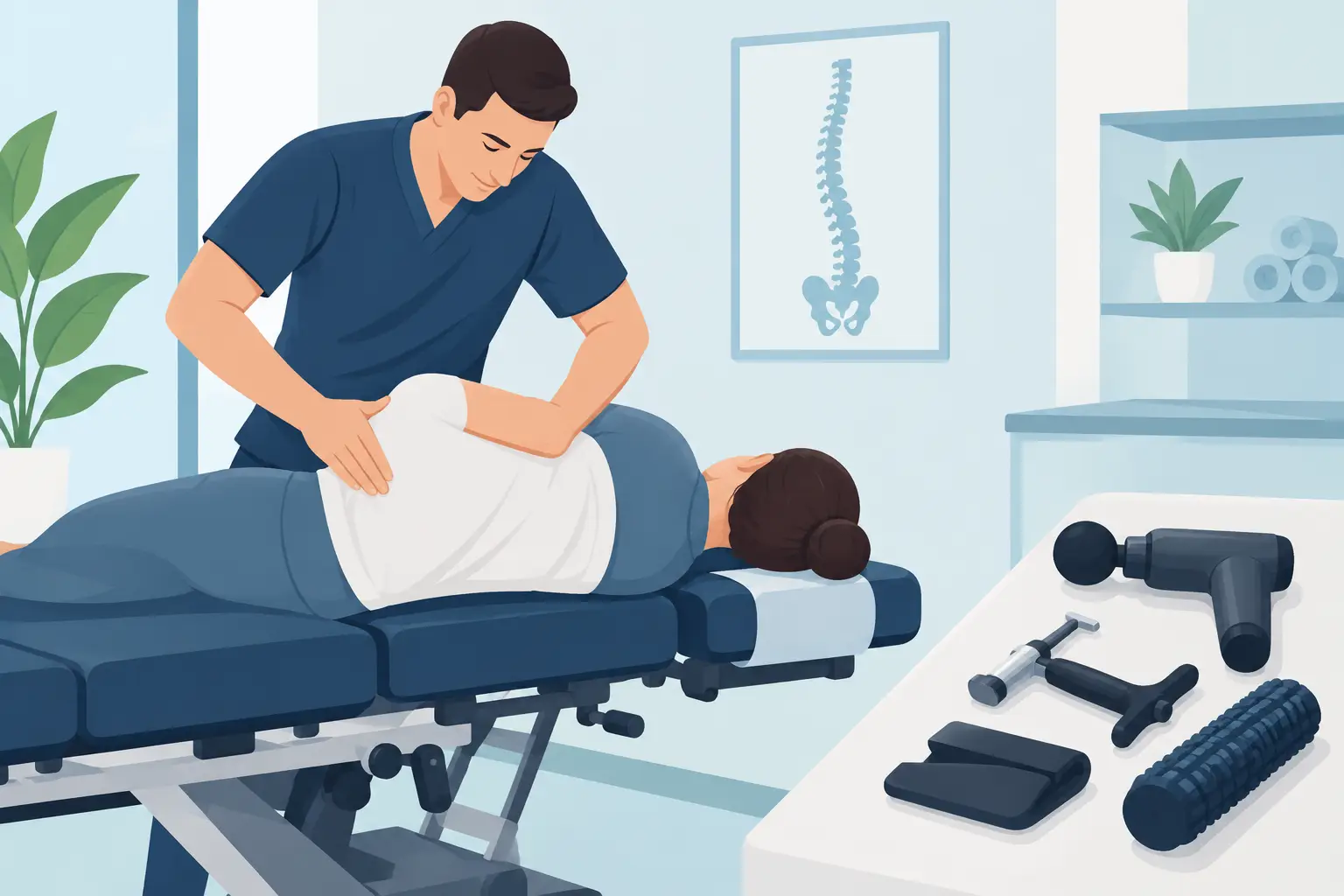
A chiropractic table is more than a place to lie down. Many tables are designed to position the body comfortably and give the chiropractor access to different areas of the spine. Some include sections that move or gently drop a short distance during an adjustment.
Drop-table techniques may be used to support a quick, controlled adjustment with less force than some traditional manual approaches. Patients often appreciate that the movement is brief and targeted. It can be useful when the goal is to address a specific area while keeping the experience comfortable.
Not every adjustment requires a specialized table, and a table feature is not automatically better. It is simply one tool your chiropractor may consider based on your needs and the technique being used.
Handheld Adjusting Instruments
A handheld adjusting instrument delivers a quick, gentle impulse to a specific area of the spine or joint. It is commonly used for people who want a low-force option, including infants, children, older adults, and patients who are sensitive to manual adjustments.
Because the instrument is precise, it can be helpful when a chiropractor wants to focus on a small area without using a larger movement. The sensation is often described as a light tap or click. While it may look simple, proper use still requires a careful assessment and an understanding of spinal biomechanics.
For pediatric chiropractic care, gentleness is essential. Babies and children are not adjusted like adults. The amount of pressure used is tailored to their size, stage of development, and individual needs.
Hands-On Adjustments
The chiropractor's hands remain one of the most important tools in care. Through palpation, a chiropractor can assess areas of muscle tension, movement patterns, and joint motion. A hands-on adjustment may involve a controlled, specific movement intended to support spinal mobility and nervous-system function.
Sometimes an adjustment produces a popping sound. That sound is simply pressure changing within a joint and does not determine whether an adjustment was successful. Many effective adjustments are quiet, especially when using gentle or low-force techniques.
A hands-on approach may be appropriate for someone looking to improve mobility after long workdays, support easier movement during pregnancy, or address the physical demands of sports and training. As always, the technique should match the person, not the other way around.
Soft-Tissue Tools
Spinal health and muscle function are closely connected. When muscles become overworked, guarded, or restricted, they can influence how the body moves. Chiropractors may use soft-tissue methods to support mobility and recovery alongside spinal adjustments.
These approaches can include instrument-assisted soft-tissue work, manual muscle work, percussion devices, or targeted stretching. For an athlete, this may support recovery after practices, games, or long runs. For a parent carrying a toddler or spending hours at a desk, it may help address areas that feel tight and overworked.
Soft-tissue work should not be viewed as a standalone answer for every ache or limitation. It is most useful when it fits into a larger plan that considers movement, posture, training load, sleep, and the way your nervous system is adapting to daily demands.
Supportive Pregnancy and Pediatric Equipment
Pregnancy changes the body in significant ways. As the baby grows, posture, center of gravity, and movement patterns can all shift. Pregnancy pillows and specialized table supports can help expectant mothers lie comfortably during care, including when lying face down is no longer practical.
Comfort is not a minor detail. When you can relax during an appointment, your chiropractor can better assess movement and deliver care with more ease. Prenatal chiropractic care is always adapted to the individual, taking into account pregnancy stage, symptoms, health history, and guidance from the patient's medical team when needed.
Pediatric care may also use supportive cushions or positioning tools to help children feel safe and comfortable. A calm, family-friendly setting can make a meaningful difference, especially for a child who is new to chiropractic care.
How Tools Fit Into a Personalized Care Plan
The best chiropractic experience is not about receiving the most tools. It is about receiving the right care at the right time. Your chiropractor may use one technique during an early visit and a different approach later as your comfort, mobility, or goals change.
For example, a recreational athlete may benefit from an assessment of spinal movement, a specific adjustment, and soft-tissue support after a period of hard training. An expectant mother may need gentle positioning and low-force care that supports comfort and mobility as her body changes. A child may receive an especially light, specific adjustment designed for their growing body.
Your care plan may also include recommendations for movement, hydration, recovery habits, or activities that support your progress between visits. The goal is to help your body adapt well to the demands of family life, work, sports, and everyday movement.
What to Ask Before an Adjustment
You deserve to understand what is being recommended and why. Before care begins, it can help to ask what technique your chiropractor is using, what you may feel during the adjustment, and how that approach relates to your goals.
You can also share any concerns about pressure, positioning, previous injuries, pregnancy, or preferences around manual versus instrument-assisted adjustments. Open conversation helps your chiropractor make informed decisions and helps you feel more at ease.
Chiropractic care should never feel like something being done to you without explanation. It should feel like a partnership centered on helping you and your family move with greater confidence and build a healthier foundation for the future.



Comments