
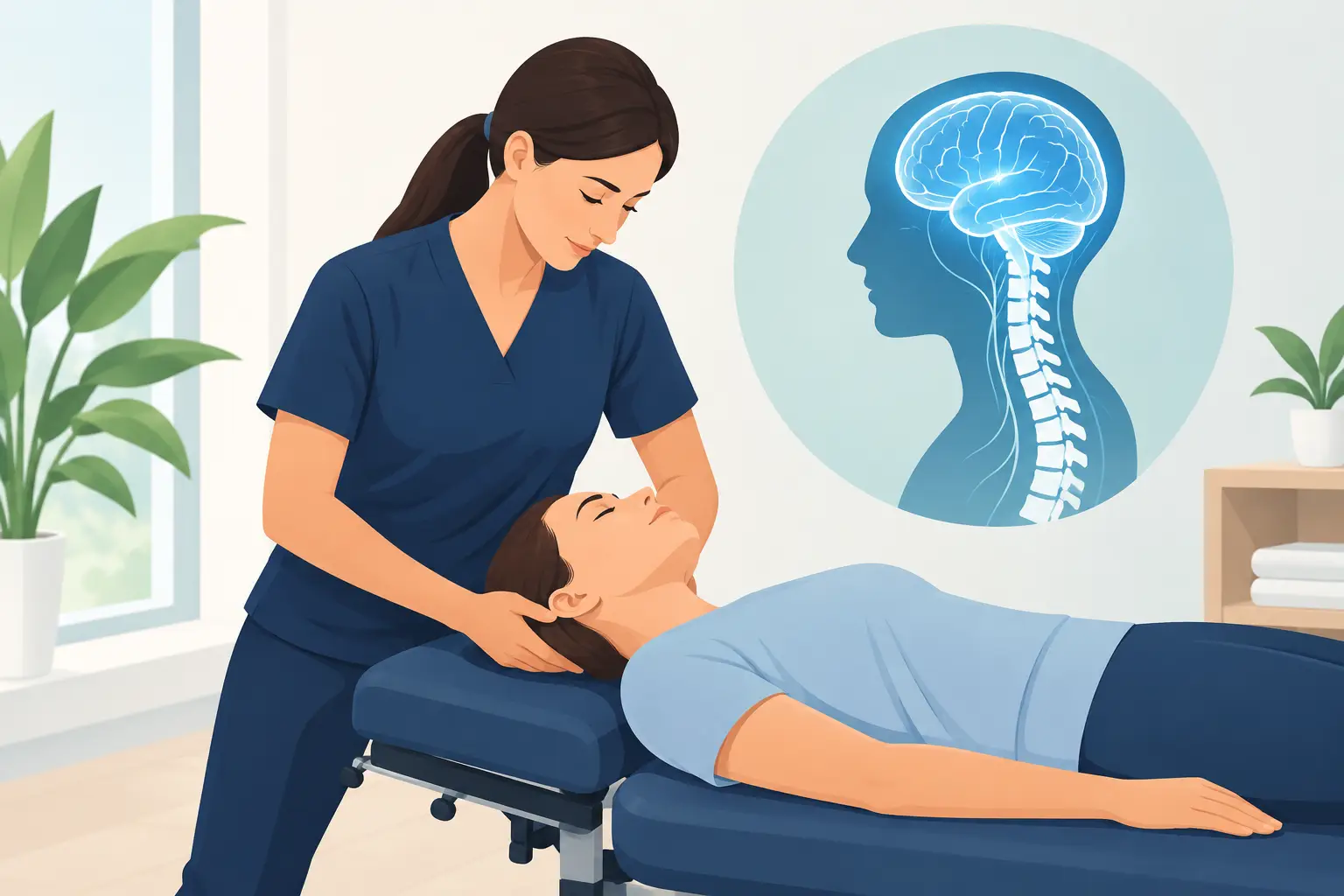
What Does a Neurological Chiropractor Do?
A parent may notice that their child seems uncomfortable in the car seat. A runner may feel less fluid on familiar trails. An expectant mother may be looking for support as her body changes week by week. In each situation, the question may be the same: what does a neurological chiropractor do?
A neurological chiropractor focuses on the relationship between the spine, nervous system, and the way your body moves, adapts, and functions. Rather than looking only at where discomfort is felt, this approach considers whether areas of spinal stress or restricted motion may be affecting communication between the brain and body. The goal is not simply to chase symptoms. It is to help you and your family build a stronger foundation for everyday movement, resilience, and wellness.
What Does a Neurological Chiropractor Do in an Appointment?
A neurologically focused chiropractic visit begins by listening. Your chiropractor will want to understand what is happening in your daily life: how you move, work, sleep, train, recover, or care for your family. For a child, that conversation may include developmental milestones, feeding, sleep, posture, or comfort. For an athlete, it may include training volume, past injuries, range of motion, and performance goals.
The examination typically looks at posture, spinal movement, muscle balance, coordination, and areas where the body may be compensating. A chiropractor may also use neurological and orthopedic assessments to better understand how your body is responding to movement and stress. The findings help shape an individualized care plan rather than a one-size-fits-all routine.
If chiropractic care is appropriate, the chiropractor delivers specific spinal adjustments. These are controlled, targeted movements intended to address areas of restricted joint motion and support healthier spinal function. The technique used depends on the person in front of them. A gentle adjustment for an infant is very different from care for a high school athlete, a desk-bound professional, or someone in late pregnancy.
Neurologically focused care also includes education. You should leave with a clearer understanding of what your body may need, whether that involves movement habits, recovery practices, posture awareness, or a recommended schedule of care. The best plan fits your goals and changes as your body changes.
Why the Nervous System Is Part of Chiropractic Care
Your nervous system helps coordinate movement, sensation, balance, and many automatic functions that keep you responding to your environment. The spine protects the spinal cord and serves as a major structure for movement. When the joints, muscles, and connective tissues around the spine are not moving well, the body may adapt by changing posture or movement patterns.
That adaptation can be useful in the short term. It may help you get through a long workday, an intense season, or the physical demands of pregnancy. Over time, though, compensations can make movement feel less efficient and place extra strain on other areas of the body.
A neurological chiropractor looks at function through that wider lens. The goal is to support the body’s ability to move and adapt well, not to promise a cure for every health concern. Chiropractic care is not a replacement for medical evaluation, emergency care, or treatment from your primary care provider or specialist. New, severe, or unexplained symptoms should always be assessed promptly by the appropriate medical professional.
Specific Adjustments, Not Generic Care
The word “specific” matters. A neurological chiropractor does not approach every spine the same way, because every person brings a different history, body, lifestyle, and goal into the office.
For one patient, the focus may be improving comfortable neck rotation after long hours at a computer. For another, it may be supporting hip and low-back mobility during pregnancy. A soccer player may want help maintaining efficient movement during a demanding season, while a grandparent may simply want to keep up with active grandchildren more comfortably.
Specific care also means knowing when to adjust and when to reassess. A care plan may include a more focused period of visits followed by less frequent wellness care, but it depends on your findings, response, and goals. Some people choose chiropractic as part of a proactive health routine. Others come in for a defined concern and decide what ongoing care makes sense after their progress is reviewed.
Care for Pregnancy, Kids, and Growing Families
Pregnancy brings rapid changes in posture, joint mobility, balance, and daily comfort. A chiropractor trained to work with expectant mothers uses techniques designed for pregnancy and adapts positioning to help patients feel supported. Many women seek chiropractic care to maintain mobility and comfort as their bodies prepare for birth, although individual experiences vary.
For infants and children, neurological chiropractic care is especially gentle and age-appropriate. Children are constantly developing new movement skills, from lifting their heads and rolling to crawling, walking, climbing, and playing sports. Chiropractic assessments for children consider age, development, movement patterns, and the concerns of the parent. Care is never simply an adult adjustment made smaller.
Families often appreciate having one trusted place where care can evolve through life stages. A child’s needs at age two will not be the same as their needs as a teenager in athletics, and a parent’s needs may shift from pregnancy support to staying active through busy family life. At Good Chiropractic, the focus is on meeting each family member where they are and creating care that supports healthy movement for the long term.
How Athletes May Use Neurological Chiropractic Care
Athletes ask a lot of their bodies. Repeated sprinting, lifting, throwing, twisting, landing, or riding can expose inefficient movement patterns that are easy to overlook until performance drops or discomfort interrupts training. A neurological chiropractor can assess how the spine and joints are moving and whether one area may be forcing another to work harder.
For recreational and competitive athletes, chiropractic care may be part of a broader performance and recovery plan. Better awareness of movement restrictions can help guide training decisions, mobility work, and recovery habits. Some athletes seek care during the season to stay on top of how their bodies are handling workload. Others use it in the offseason while rebuilding strength and refining movement.
There is a trade-off to consider: an adjustment is not a substitute for proper conditioning, sleep, nutrition, coaching, or rehabilitation after an injury. When an athlete has a significant injury, concussion symptoms, weakness, numbness, or pain that is worsening, medical assessment comes first. Chiropractic works best when it is part of an informed team approach to health and performance.
What a Neurological Chiropractor Does Not Do
Clear expectations make it easier to choose care with confidence. A chiropractor does not diagnose every medical condition, prescribe medication, or replace your physician. They should not make guarantees that an adjustment will cure a disease or resolve every symptom.
They also should not pressure you into a plan you do not understand. You deserve to know what the assessment found, why a recommendation is being made, what the expected goals are, and when your progress will be reviewed. Ask questions about the techniques used, the frequency of visits, and whether your health history suggests the need for additional medical care.
The right chiropractor will welcome those questions. Good care is collaborative, especially when it involves children, pregnancy, a complex health history, or a return to sport.
When It May Be Time to Schedule a Consultation
You do not have to wait until discomfort becomes overwhelming to seek a chiropractic evaluation. People often schedule when they notice recurring stiffness, reduced mobility, slower recovery after activity, changes in posture, or difficulty doing the things they enjoy. Families may also want guidance during pregnancy, early childhood, growth spurts, or the start of a sports season.
A consultation gives you space to discuss your goals and determine whether neurologically focused chiropractic care is a good fit. If it is, your plan can be built around the life you want to live: carrying a growing child comfortably, hiking Northern Colorado trails, competing with confidence, or simply moving through your day with greater ease.
Your body is always adapting. Giving it thoughtful support can be a meaningful way to care for the people, activities, and moments that keep you moving forward.



Comments